 Approved Motorcycle Training Provider
Advanced Riding Course (Level 2) in Pennsylvania
Advanced Riding Clinic, Level 2 (1 day non-licensing course)
Total Control® Advanced Riding Clinic, Level 2
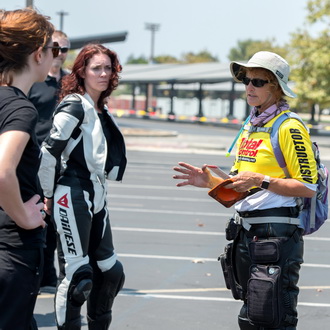
The Total Control® ARC, Level 2 takes off where Level 1 left off. More challenging exercises and riding technology from the best-selling book Total Control adds additional advanced techniques to any experienced rider's "toolbox." Where the TC ARCSM builds proficiency in your riding, Level 2 puts you on a path to true mastery.
The TC ARCSM L2 is the perfect next step for those wishing to continue their advanced training as part of a lifelong learning regimen. (Note: All participants MUST have completed Total Control ARC®, Level 1 as a prerequisite. No exceptions.)
During our Advanced Riding Clinics, every drill is performed one at a time, and at street-legal speeds, in a controlled environment. After each run, you will receive professional, concise coaching on the specific skills you need to work on to transform your riding. From cruisers to sportbikes, all types of motorcycles and riding styles are welcome to attend.
What ARC, Level 2 Covers
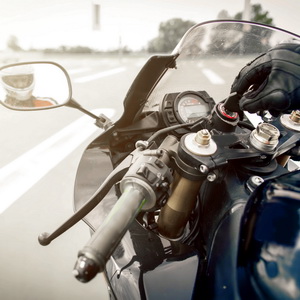
Riding Psychology
You know what it is like when you are 'in the zone', everything just seems to flow, one corner seamlessly blending into the next, and you are always in the right place on the road. You also know when you are not in the zone, because everything seems to go wrong, the ride is harsh and jerky, cars take a swipe at you and it just feels like you are having a generally bad day. During the Advanced Riding Clinic Level 2, you will learn more about how fear, concentration and attitude can affect your riding and what simple steps you can take to ensure you have a perfect ride every time.
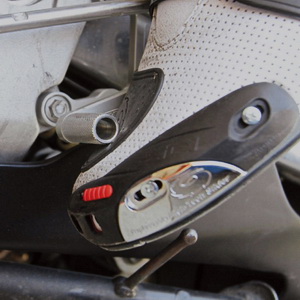
Speed Shifting
Even many experienced riders take too much time to shift. Shifting efficiently is important because during the time between shifts, the rider is especially vulnerable. When a sudden change in speed is required, like when a car pulls into your lane, it's vital to be able to accelerate immediately. If you're caught up in the shifting, you won't be able to speed up in an emergency. During our Advanced Riding Clinic Level 2, you will learn how to upshift and downshift quickly and skillfully.
Maximum Braking
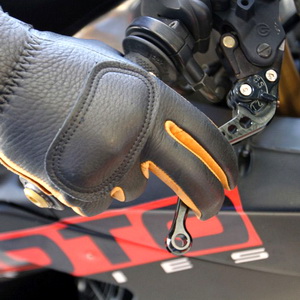
Because emergency stops can be scary due to the limited amount of traction you have and how much it would hurt to kiss the ground, very few riders practice quick braking and even less have the actual knowledge and skills to do it safely. At our Advanced Riding Clinic Level 2, you will learn and practice the right technique to achieve the shortest stops possible so you become prepared when you need to brake hard and avoid a hazard.
Trail Braking
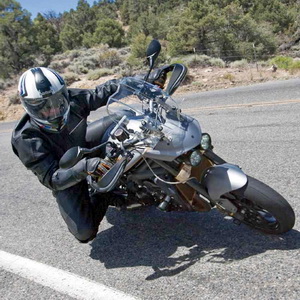
New riders are usually taught to do all of the braking before making a turn. This is sometimes good advice, but there are times when it is preferable—or even necessary—to continuously brake before and while entering a corner. While many people consider this a racing technique, during our Advanced Riding Clinic Level 2 you will learn that there are even more benefits to using trail braking on the street than there are on the track.
Tightening Your Line
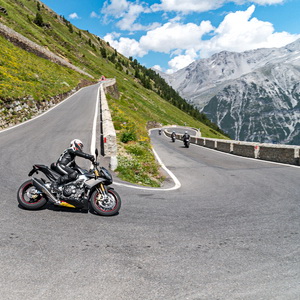
Not all curves are created equal and there are times when you need to tighten your line mid-turn. Whether it is because you unexpectedly found yourself in the middle of a decreasing radius turn or because you need to avoid a hazard in the curve, knowing how to skillfully reduce the radius of your line can save you from crashing and getting hurt.
Chassis Tuning
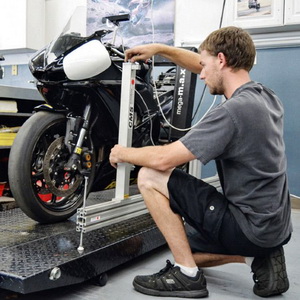
There is more to handling than just suspension setup—chassis geometry also plays an important role. Because your idea of the ideal handling characteristics for your motorcycle may be different from the ideas of the engineers who designed it, tailoring your chassis specifications can make a dramatic improvement in how your bike handles.
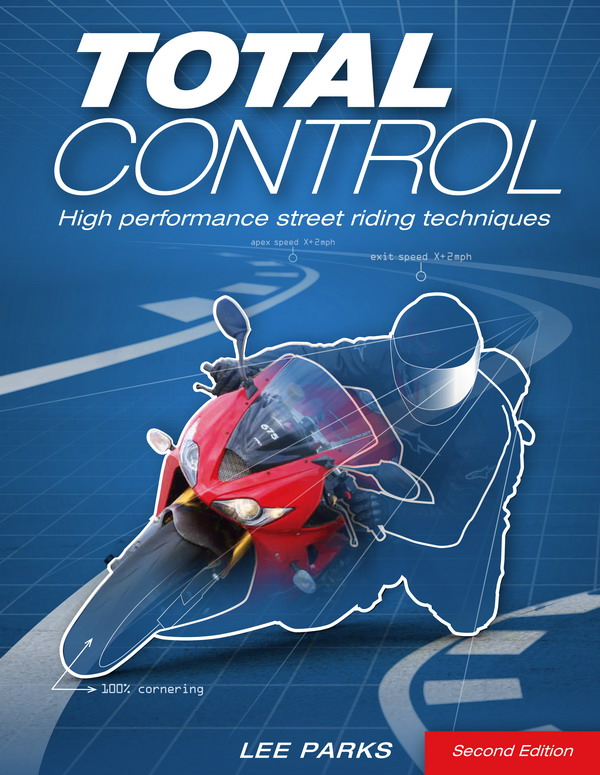
Our Advanced Riding Clinics are based on the best-selling book Total Control: High Performance Street Riding Techniques, by Lee Parks.
How It Works
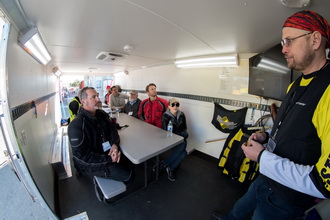
Part of the reason for the program's success is the dynamic classroom training, which includes both theory and application of the Total Control Advanced Riding Clinic techniques. By including a basic analysis of vehicular dynamics, riders get a clear understanding of how their actions affect their bikes. For instance, in the suspension portion of the class, riders learn how to analyze the effectiveness of their suspension and how to set it up for maximum control and comfort.
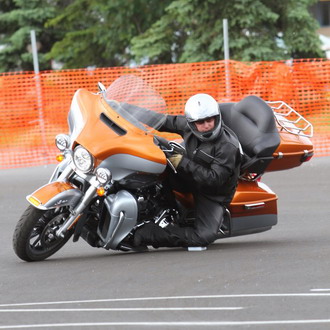
The range portion of the training is done in a large parking lot or skidpad where each of the skills are individually broken down and practiced. Working on only one skill at a time is the fastest way to make consistent riding improvements. The beauty of doing it this way is that the student is never asked to make a huge "leap of faith" in any one area. Each skill is built up in small two-mph increments until the desired result is achieved. This allows for high confidence and never gets too scary. In fact, cornering speeds never go above 25 mph. While this may seem slow, in a tight enough corner, 25 is very, very fast. Combined with a strategic "building block" formula for integrating the individual skills into a complete riding package, the Total Control Advanced Riding Clinic enables riders to learn faster and easier than ever before. Equally important, all the Total Control Advanced Riding Clinic skills are taught with their direct applications for street riding. After all, knowing how to do something is of little value if you don't understand when and where to use it.
Course Cost
This course is not provided under the PennDOT motorcycle contract for PA residents; a tuition payment of $370 is required.
Requirements
The Advanced Riding Clinic, Level 2 is not a licensing course. You must possess a valid motorcycle license and have completed the Total Control® ARC, Level 1 in order to participate. All students must provide their own motorcycle or scooter. Motorcycle or scooter should be in proper working order, including cooling and charging systems, and a battery that is in good condition. Absolutely no race tires, race compound tires or car tires allowed regardless if they are DOT approved.
Required Gear
Protective gear is required for all students, which includes a DOT-approved helmet (full-face recommended), motorcycle jacket and pants, gloves and boots that cover the ankles. Jeans and fingerless gloves are not allowed, but Kevlar jeans will be accepted.
The Total Control ARC® Promises
The Total Control® team is committed to making you a better and safer rider and, in doing so, makes these promises:
Specific, measurable improvement in your riding
No matter what skill level you are now, the Total Control Advanced Riding Clinic® will make a recognizable difference in your ability to control your bike.
Better understanding of how your bike works
How what you do affects your bike's ability to maintain traction and control.
The ability to self-diagnose riding problems in the future
While it's great to be able to ride better in front of a skilled coach, it's equally important to be able to coach yourself when you detect a riding problem in the future. There are enough support materials in our package to help make sure you won't forget what you learned during your training.
High teacher-to-student ratio
Each class is divided in groups with never more than six students per instructor for lots of individual attention and support.
Friendly, professional service
The Total Control Advanced Riding Clinic® instructors are highly trained and carefully handpicked for their teaching abilities and friendly dispositions. Your experience at the Total Control ARC® will be a positive one.